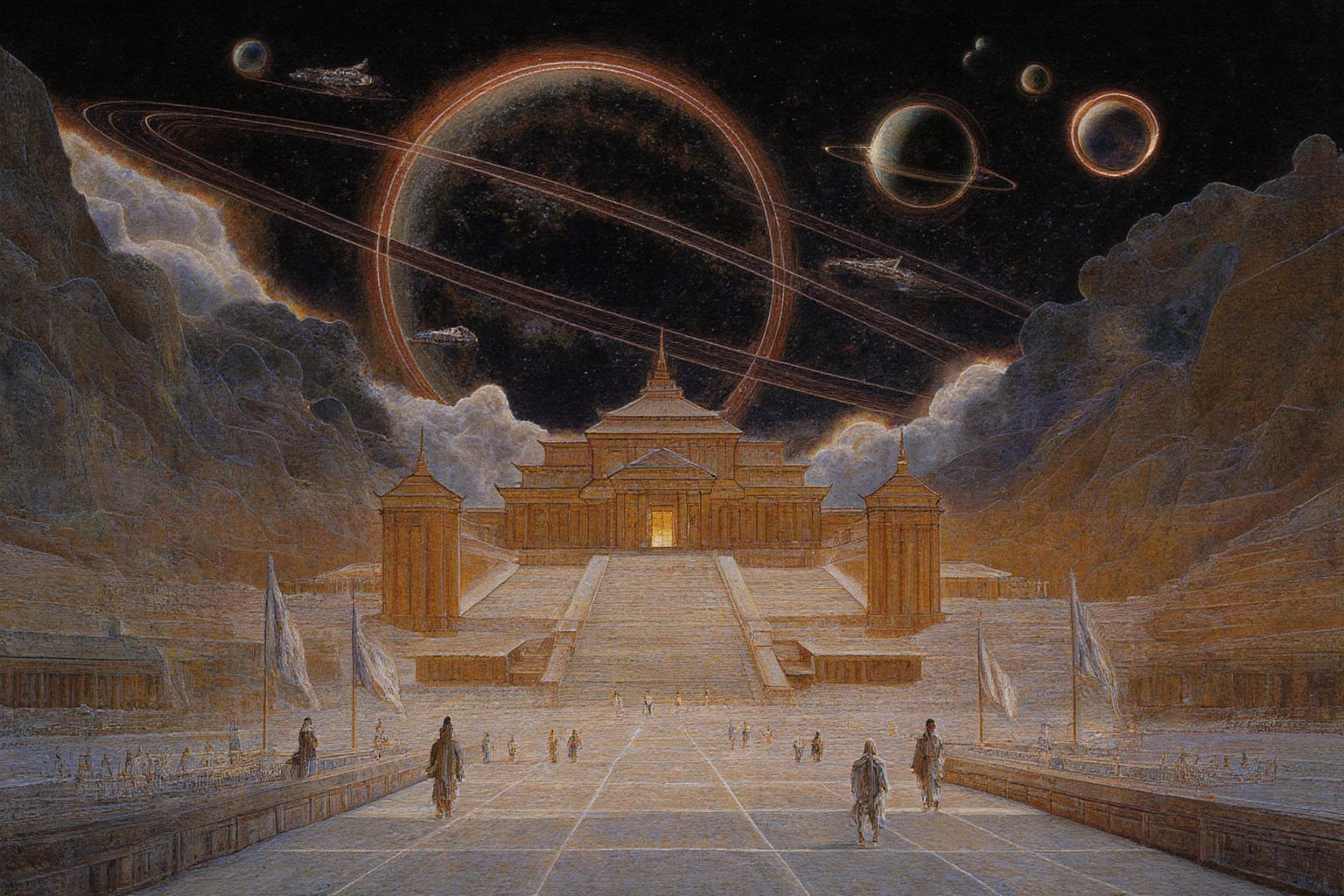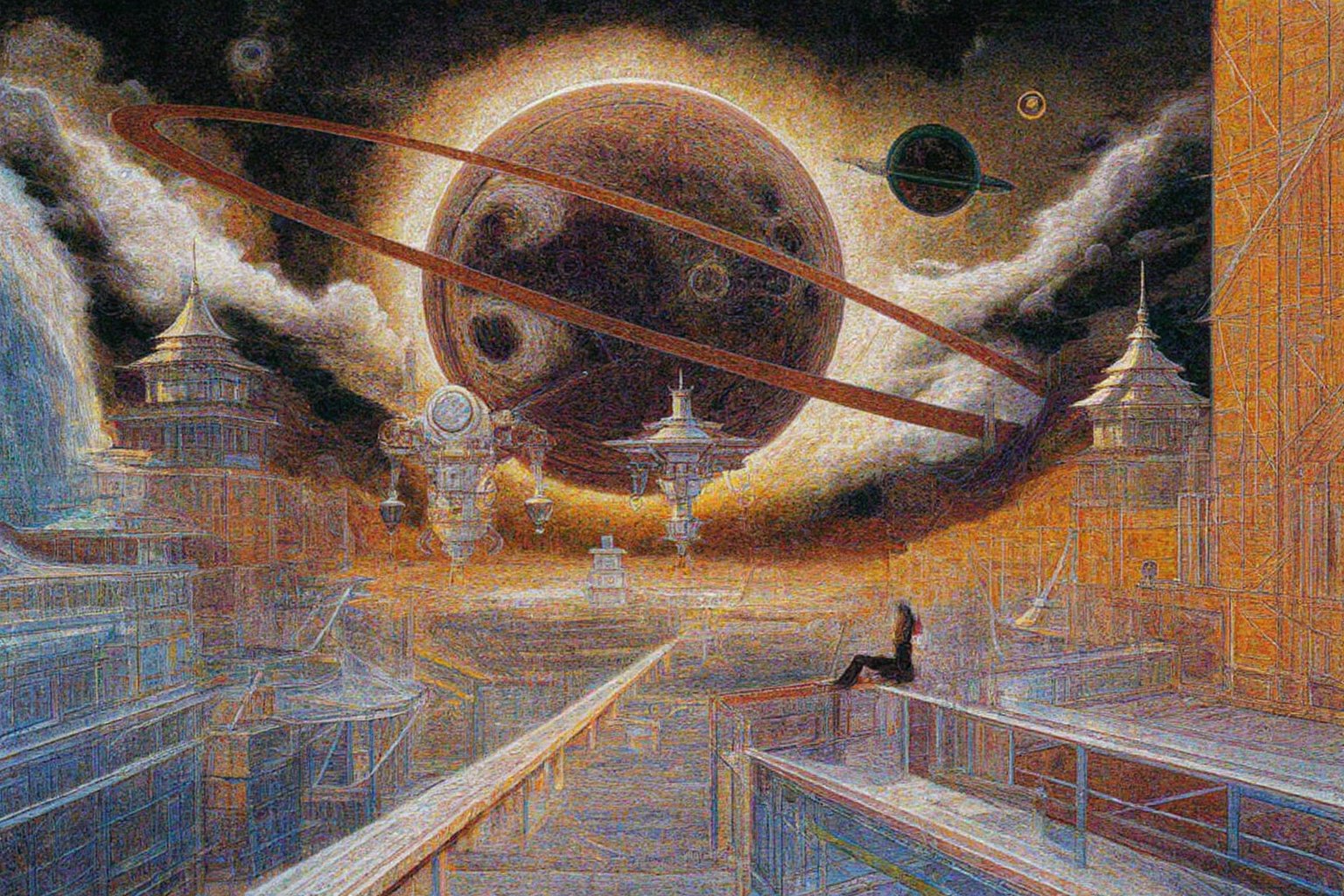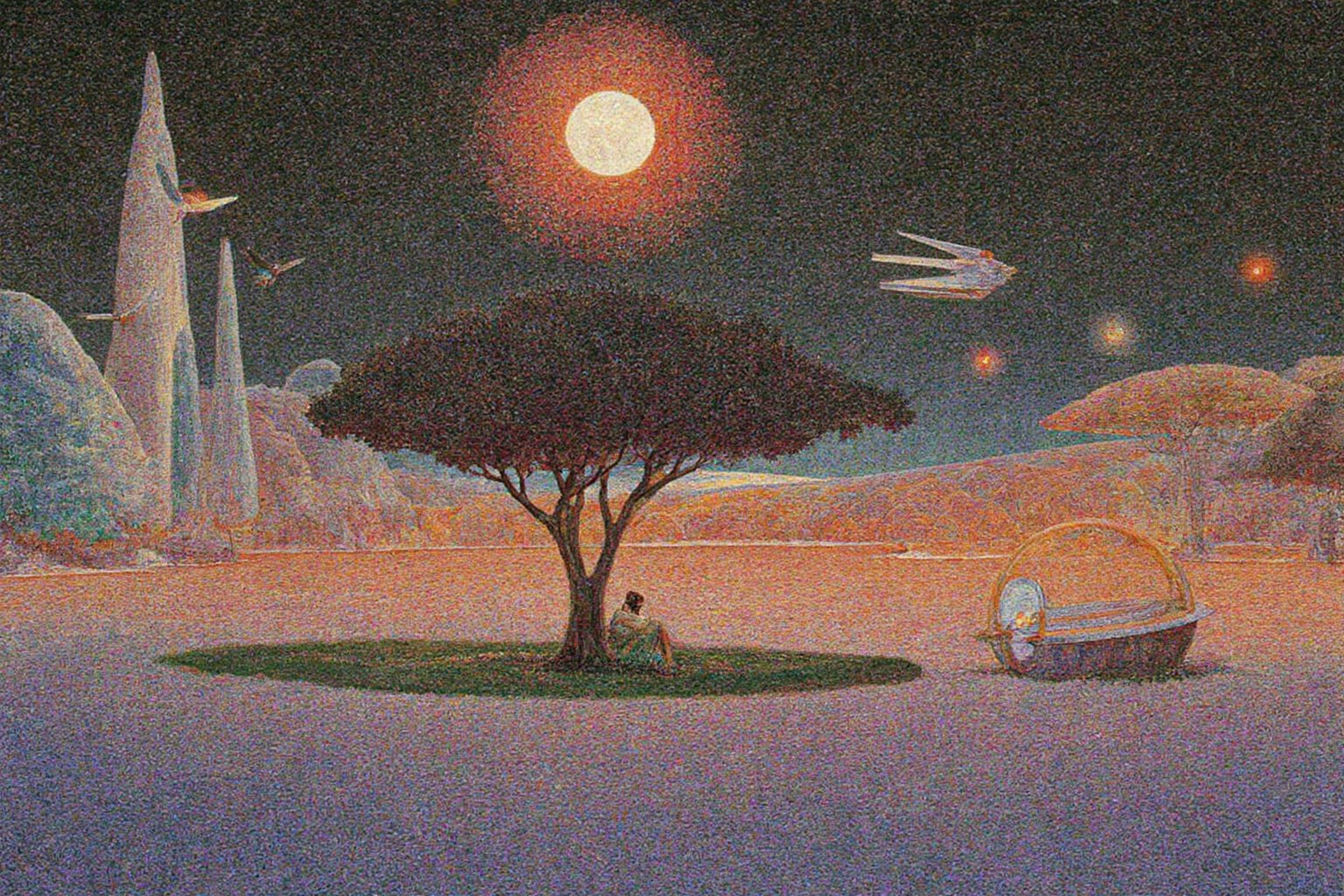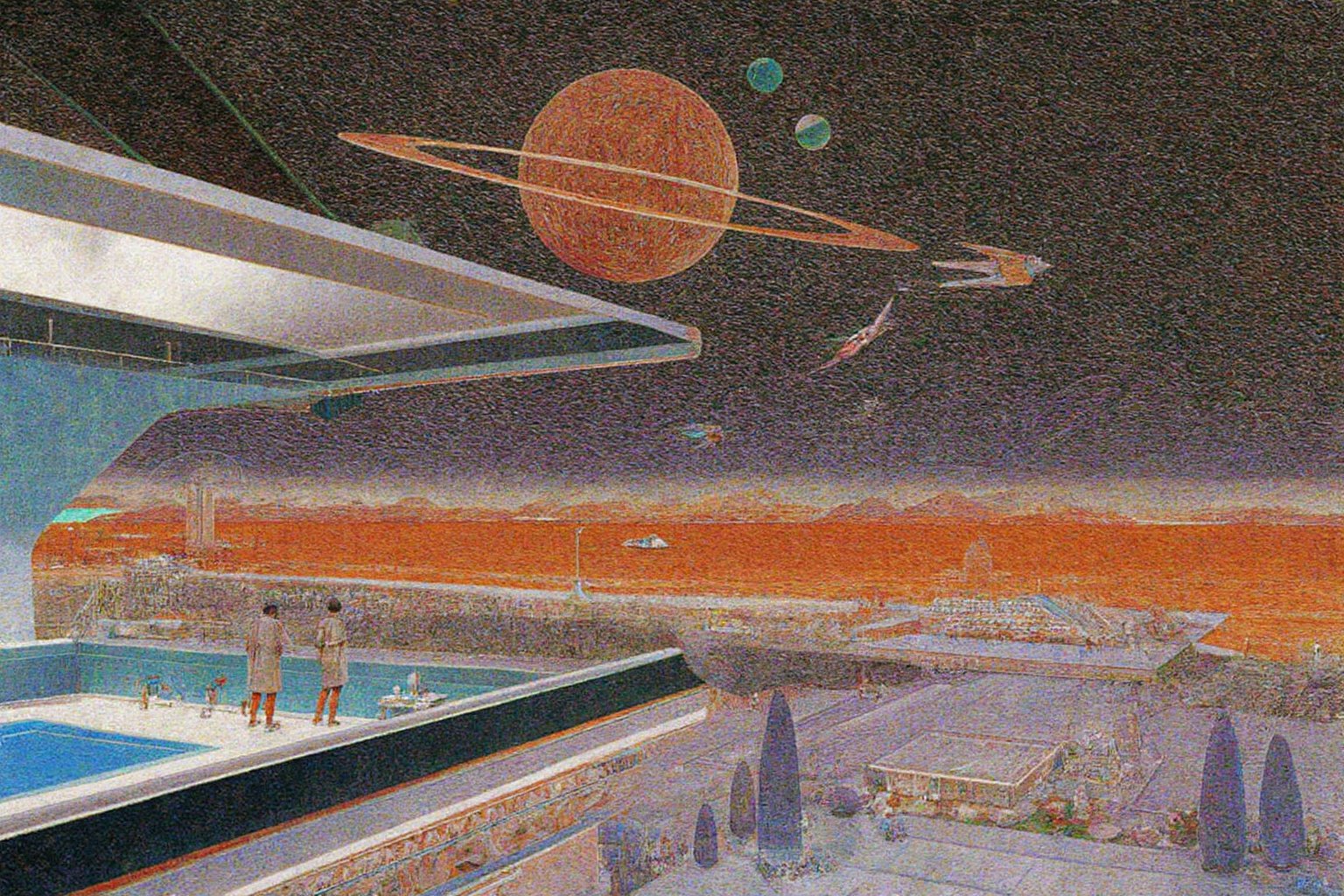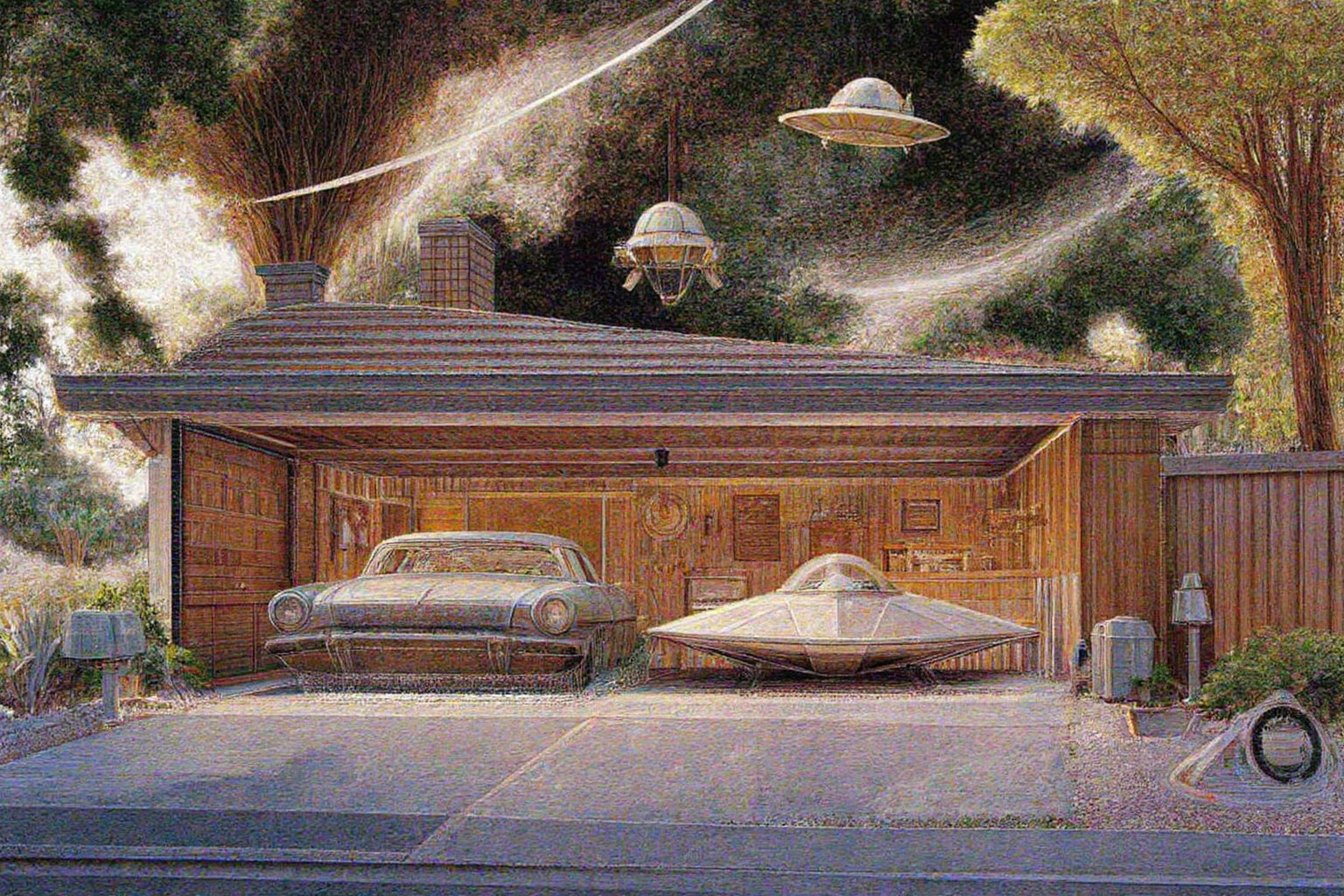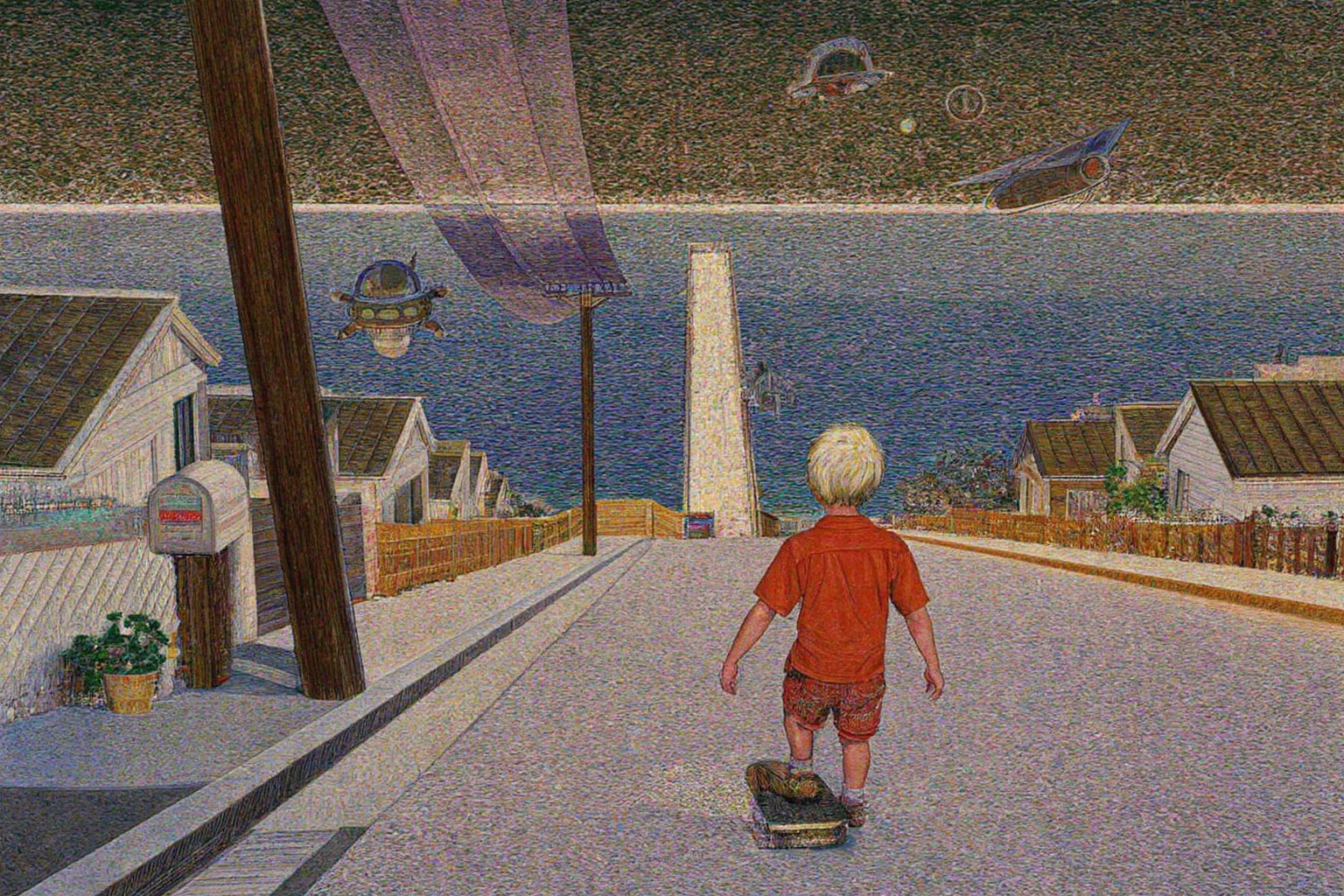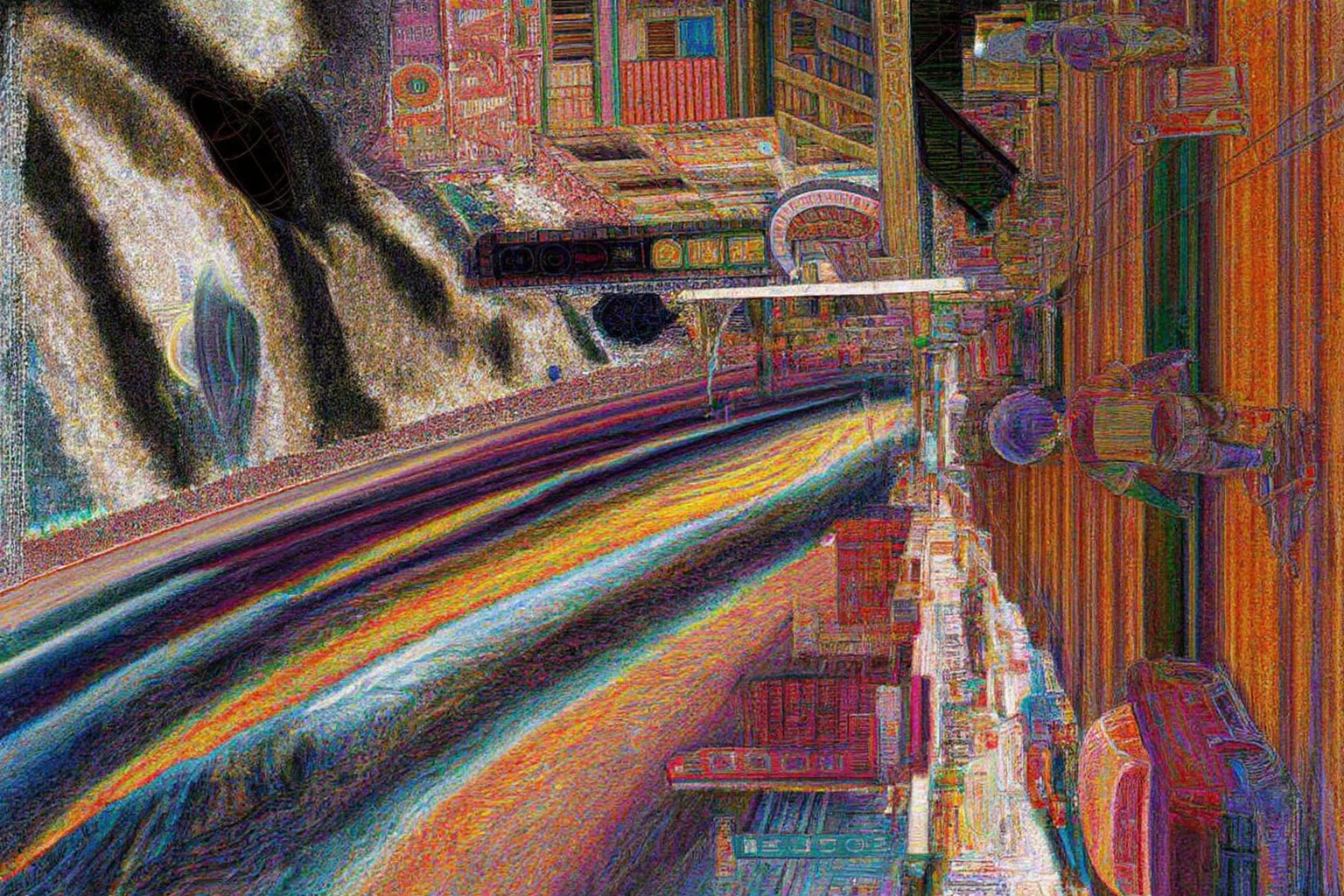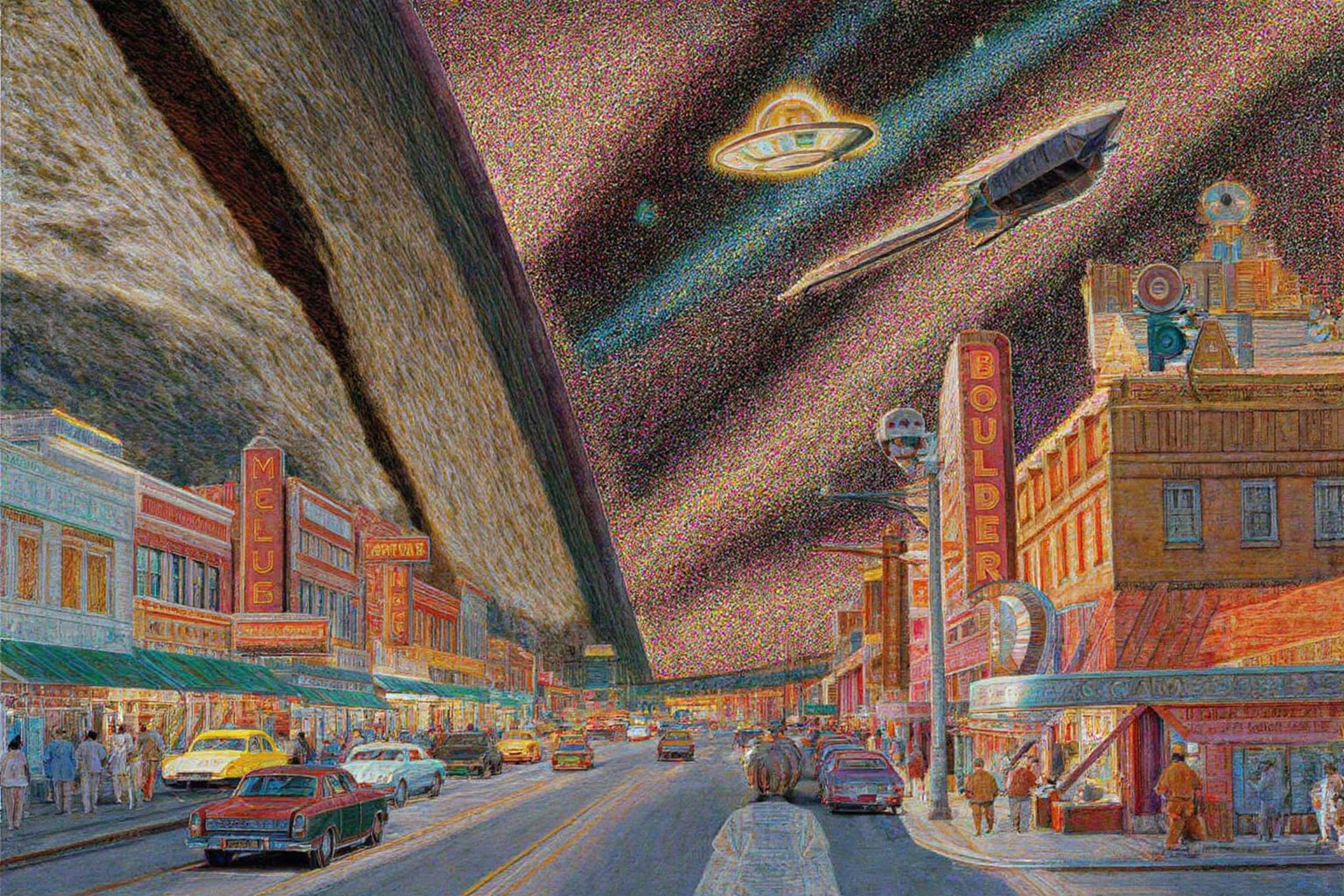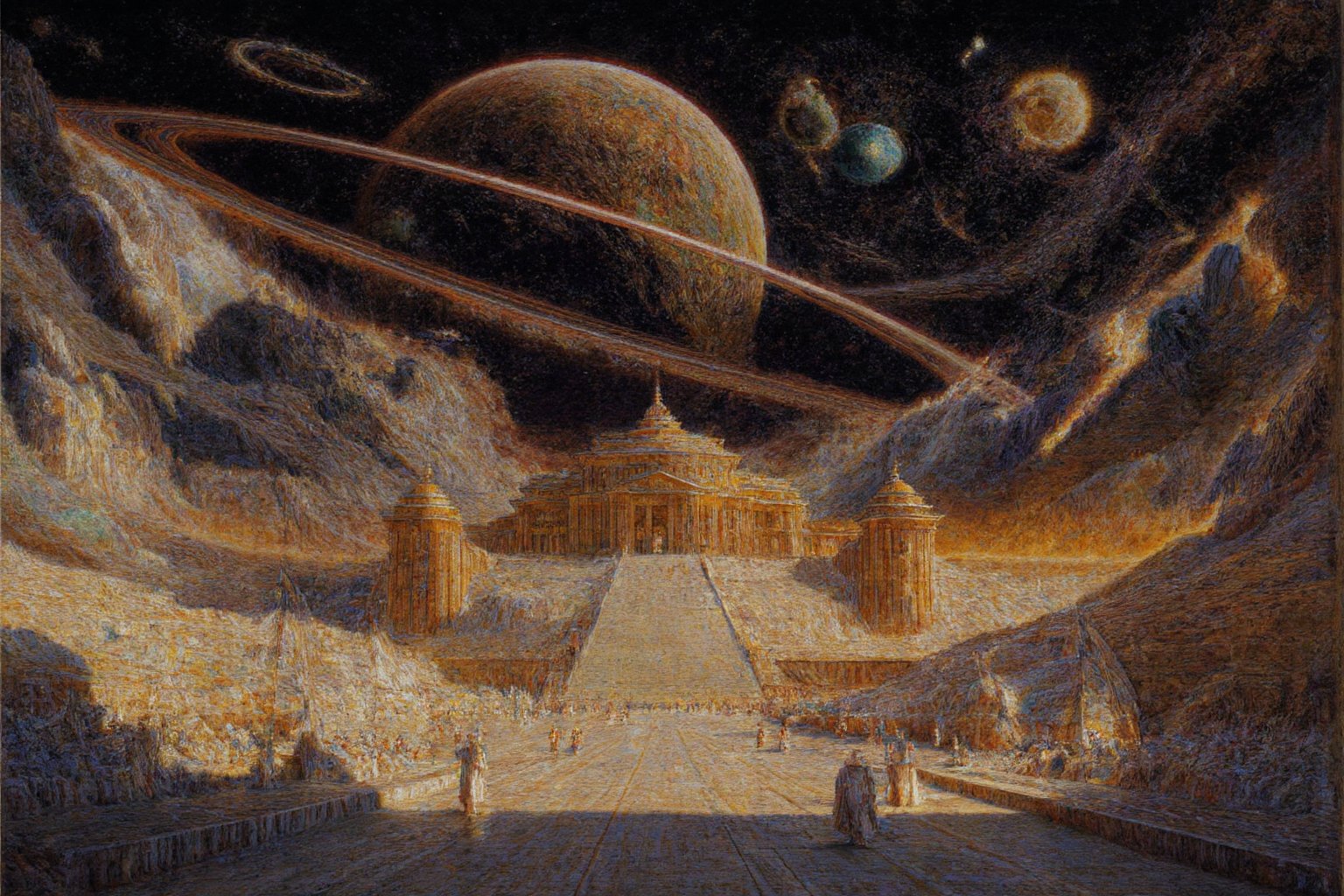
The LoRA file wasn't handed in. The dataset images are another artist's work, so only the captions are shared here.
The question
Jesseco didn't start from a style but from a question: can AI act as a design partner that brings together things that rarely coexist, like the ancient and the futuristic, the sacred and the technological, and turn them into scenes that still make sense?
What they did
- Built a dataset held together not by one look but by shared principles: monumental scale, axial composition, ceremonial space, celestial backdrops, technology intruding, and painterly light.
- Designed a two-level workflow. First a language model (GPT) turns a rough idea, mood and sketch into a structured prompt covering composition, hierarchy and key objects. Then Flux with the LoRA renders it.
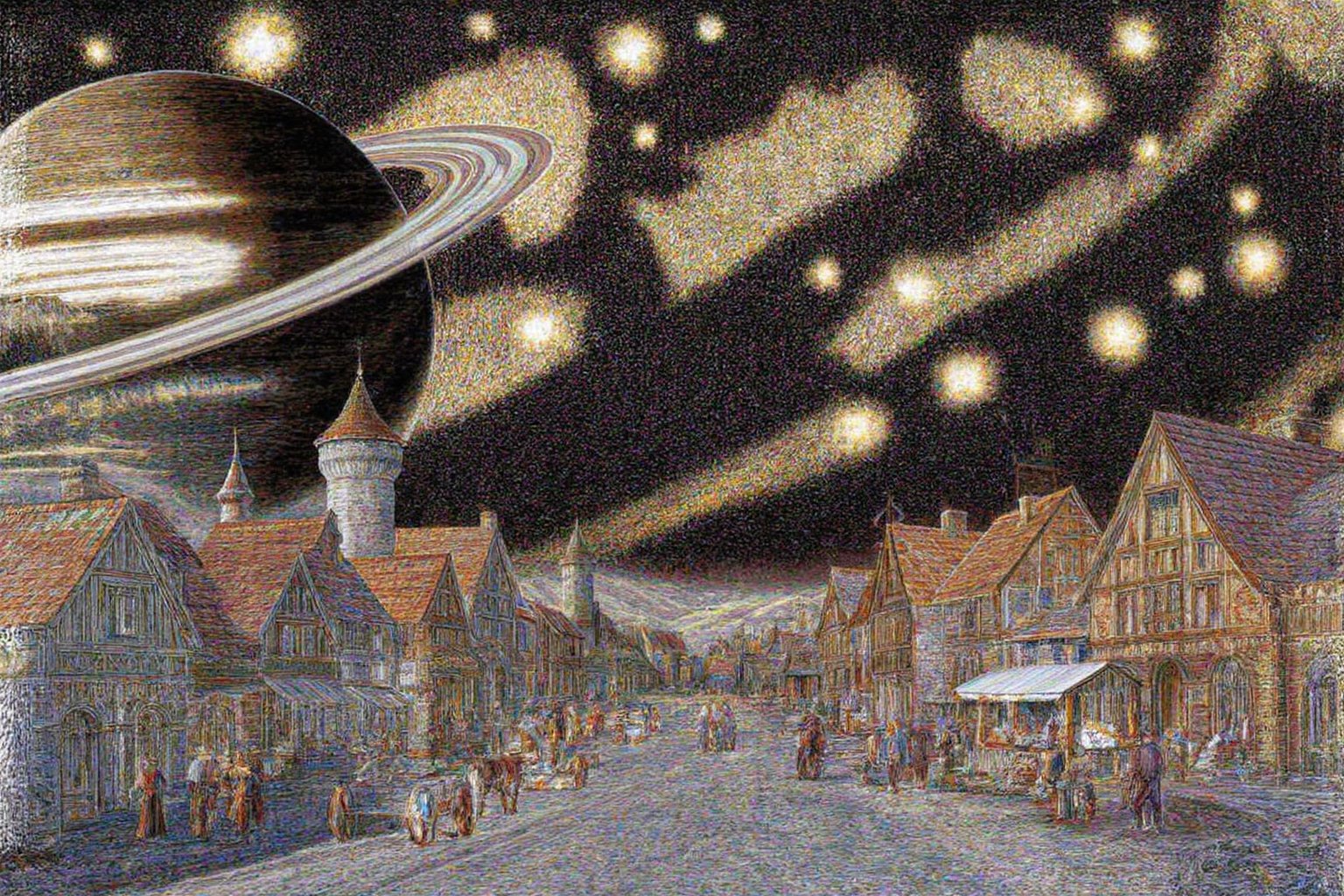
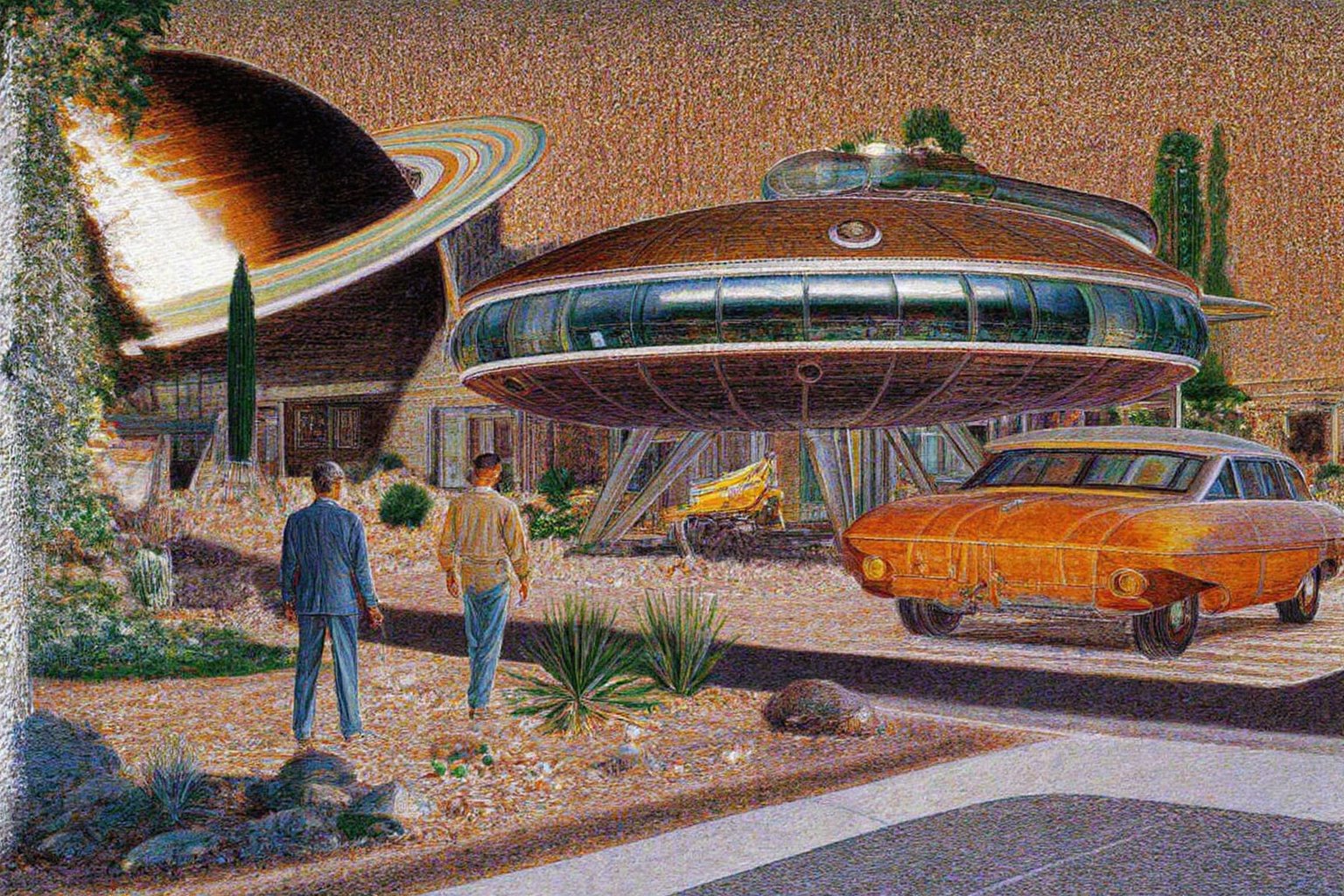
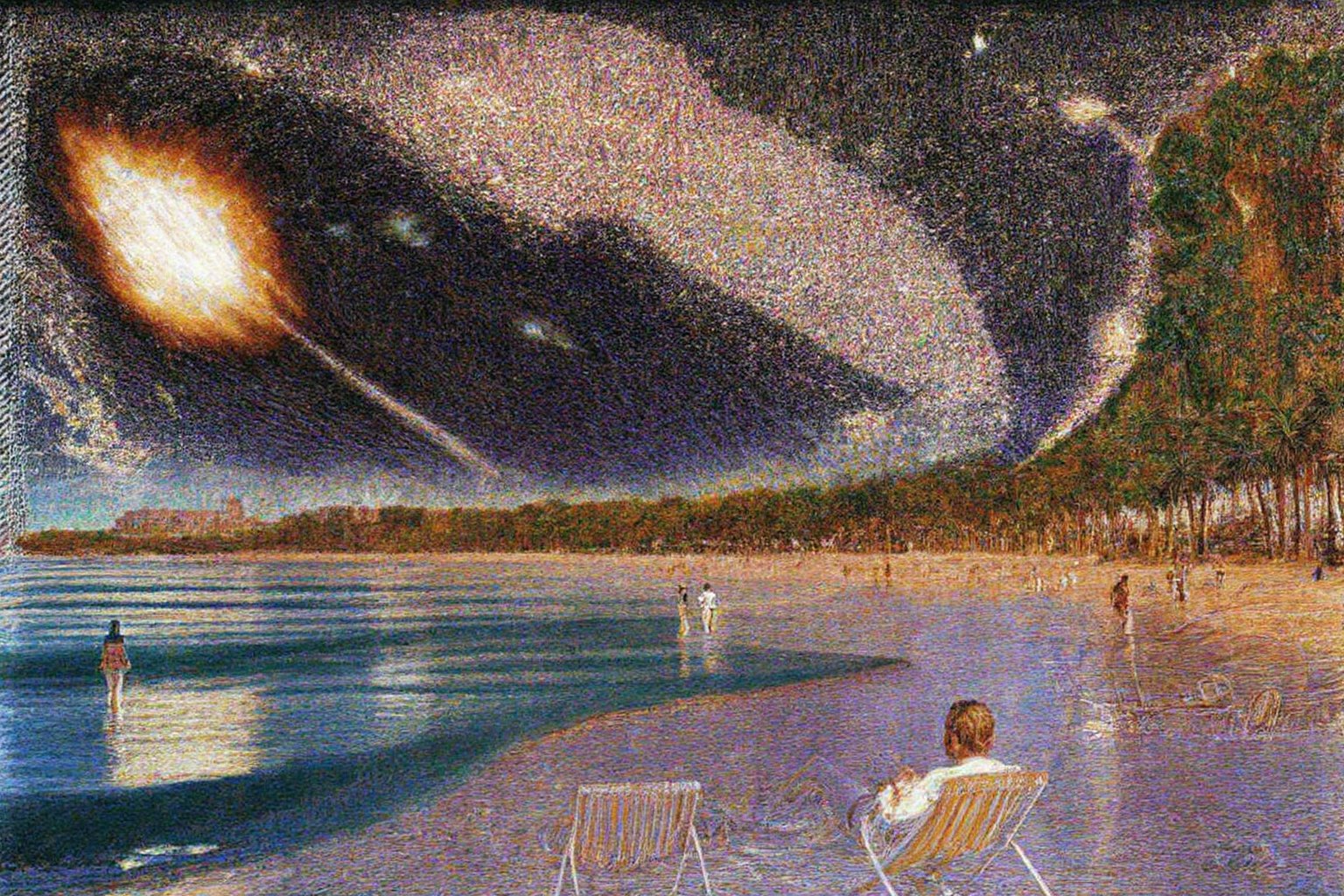
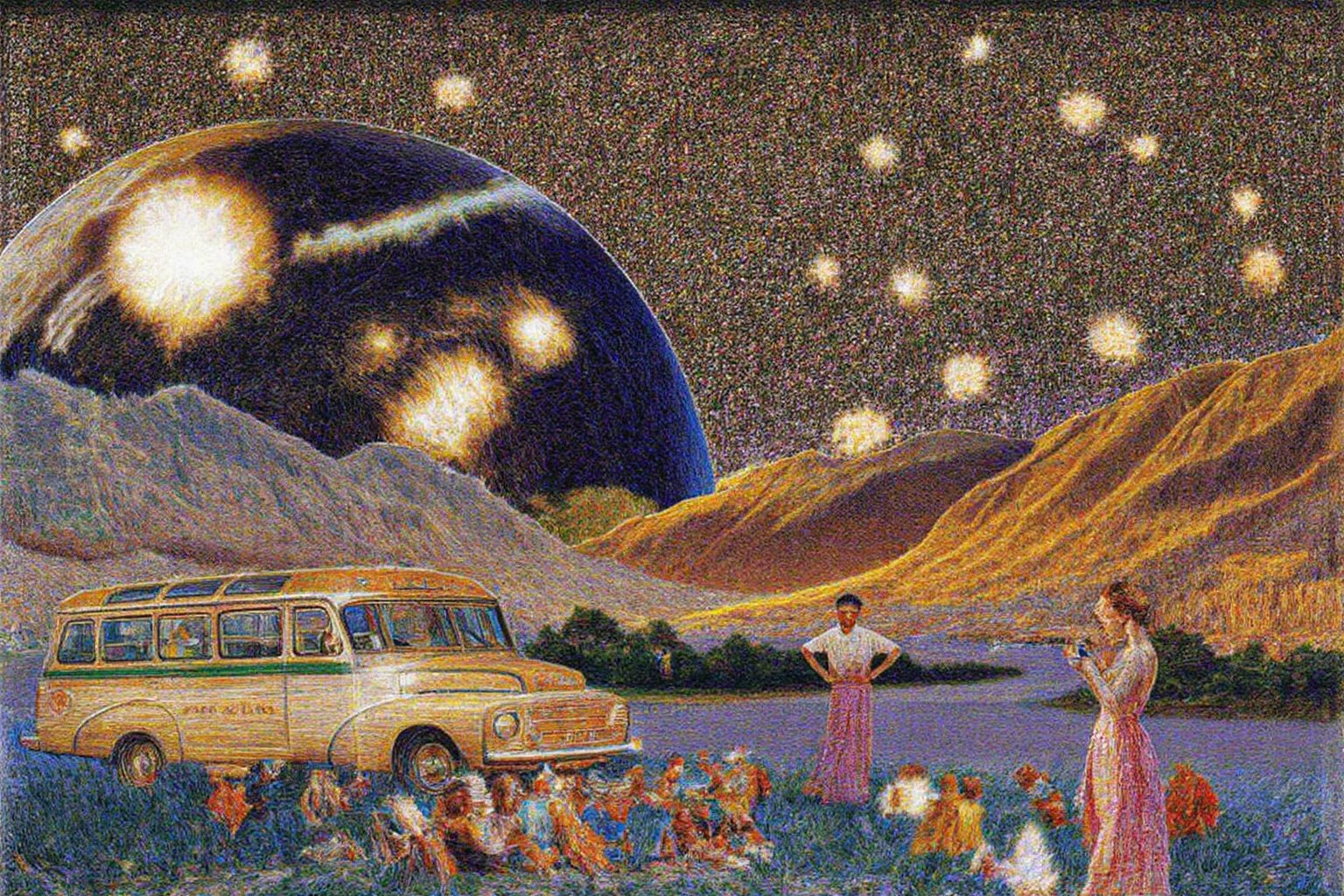
- Made twelve "Contrast" images, from a temple plaza under giant planets to 1950s American suburbs with flying saucers and a medieval village under a ringed planet.
What they found
- Some images held the tension between ancient order and future imagery, but results weren't always stable.
- Often the model fell back on familiar dramatic motifs, giving images that were striking but not spatially new.
- Coherence doesn't automatically mean originality. The value was in opening up possibilities to evaluate and question, not in final answers.